Fee payment in Fedena 3.5 through mobile

Fedena 3.5 Fee Payment Mobile


There were 1.5 Billion smartphone users in 2014 and that’s expected to grow to 2.5 billion by 2019. While computers/desktops are 1.6 billion in 2015 and expected to reach 2 billion by 2019. Smartphones are replacing traditional desktop and laptops at a rapid pace. Users are getting aligned to using smartphones day by day. The growth in smartphones has made service providers develop mobile-centric user experience for users. Fee collection and payment is one of the most used features in Fedena and we couldn’t ignore the feedbacks from our customers to make Fedena more mobile friendly.


In Fedena 3.5 we have incorporated fee payment through mobiles. Students and parents can check their fee details, pay fees online, and print the fee receipts–all from their mobile phones. Through the mobile, fees can be paid on the go and unlike the desktop or laptop which demands a working space. This makes fee payment easier for parents / guardians. In case a parent is abroad and travelling and it’s the last date of fee payment, in such a scenario that parent can pay the fee with the help of this module. The user interface of fee payment in Fedena is completely mobile friendly so that users have a hassle free experience.


How does one make an online fee payment?


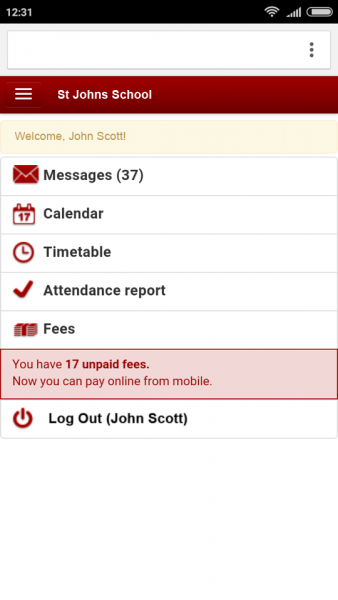
There are four login options in Fedena. Administrator, Employee, Student, Parent. Fees can be paid by either logging in as a student or as a parent. Once you login to Fedena with your login credentials, you can see the following screen


Fedena 3.5 Mobile payment page


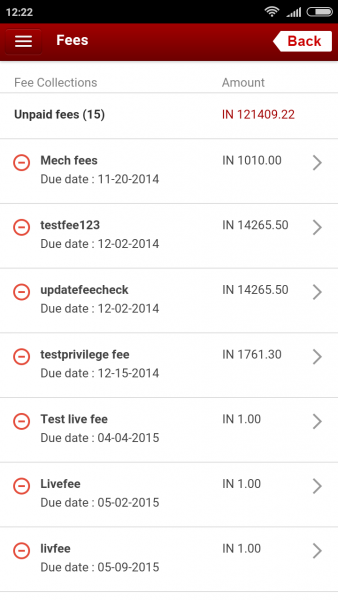
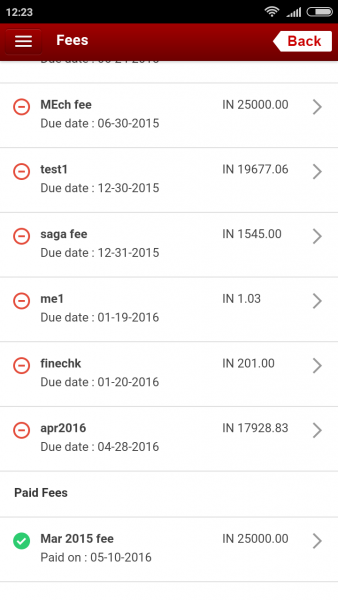
The Fees section in the home page will show the total number of unpaid fees. Click on Fees section, you will be able to see the fees you have paid and which you haven’t.


Fedena 3.5 Fees page


Fedena 3.5 Unpaid fees page


Now once you know the fees to be paid, you can check the due date of each unpaid fee. Now fee can be paid for each fee separately. It is to be noted that all the multiple unpaid fees cannot be paid at one go. You have to pay each fee separately. Click on any unpaid fee and you can see a screen as shown below


Fedena 3.5 Payment portal page


Click on ‘Pay Fee’ button which will direct you to the payment page. Here there are multiple options for payment. You can pay via net banking, using your credit or debit card or an online wallet, currently Fedena 3.5 supports PayPal, Interswitch, Authorize.net, Stripe, Braintree, PayU, and CCavenue. Once the payment details are given, payment will be credited to the institute and the fee will be shown under ‘Paid’ category.


Online payment is very helpful for parents and students so that they can avoid long queues in school, save on travel time to the institute, hassles of cash transaction etc. Moreover, as smartphone usage goes up, we are sure that this feature will soon become the most used by our users.

10 Life Lessons You Can Learn From Teachers

Fedena Class Board


There’s no overstating how important a role a teacher can play in one’s life. With the amount of time they spend with us, watching us grow into responsible human beings, it’s fair to say that teachers do indeed come across as second parents. They are influential by nature and often take advantage of opportunities to teach life lessons when they present themselves.


Life lessons taught by teachers can have a lasting impact on students. In many cases, sharing these life lessons can have a far greater impact than teaching standard based content. These ‘Teachable moments’ expand on various topics and discuss the various aspects of life. Here are 10 life lessons you can learn from teachers:


  •   Hard Work Pays Off

It’s no secret that hard work pays off in one’s life. Teachers today understand that some students can be exceptionally gifted but in the end, they too will fail for being too lazy as there is no real substitution for hard work. The saying obviously goes that if you want something, you must be willing to work equally hard for it and this surely goes without saying.


  •   Give Respect, Get Respect

A great teacher will always lead by example. This is because most of them are aware that if they give their students respect, most of them will return the same. This is a valuable lesson to learn from teachers as it enables one to be more humble and simple in nature.


  •   Teamwork Brings Great Reward

Teamwork is a major and valuable skill taught in almost every school. Teachers today believe that it’s imperative that a child understands the meaning of teamwork and the benefits involved. Schools provide this opportunity for children to work together and achieve something.


  •   Always Make Smart Decisions

Smart decisions are integral to one’s individual development. A good teacher will always teach students to weigh out the possibilities since an array of poor decisions can lead to extensive failure. Students are often thought to think each decision through since every step has a consequence. With time, we learn to make smarter choices.


  •   We Can’t Control Everything

In time, we learn that there are so many things in this world that are never truly within our control. For instance, going to school and studying in a classroom from books because it is a law to do so are just a few things that are out of our control and we need to do. A good teacher will teach us that these aspects will always be out of our control and that we must adapt.


  •   Change is Inevitable

Life is dynamic and is constantly changing with changes in situations. If there’s one thing we can never be prepared for, it’s change. It can never be predicted or pre-determined. A good teacher would teach one to be mindful of the changes that may occur. Not everything stays constant, as things will always change.


  •   You Can Become Anything You Want

Any teacher would tell their students that they will always have the potential to become anything they desire. There is no greater support system here than the case of a teacher who acts as the best morale booster. It may be cliché, but it’s also a valuable lesson that teachers never stop teaching. They provide hope and belief that one can achieve and become anything.


  •   Always Stay True to Yourself

Just because things become difficult, doesn’t mean you have to change the kind of person you are to suit other’s needs. There may come a time when you may find yourself being the odd one out or that you may care about what others think. Making a decision based on what someone else wants or thinks almost always turns out to be a wrong one. Teachers convey the message of self-belief, trusting in your instincts, setting goals, and reaching those goals without personal compromise.


  •   Never be Afraid to Make Mistakes

A good teacher will teach you that it is common to keep making mistakes as they are the best ways to learn. It’s only human to make mistakes and they contribute considerably towards one’s overall personal development. Making mistakes will teach you to be humble, help you discover who you are and live a life without regrets. Mistakes, in the end, will provide excellent learning opportunities.


  •  In the End, You Control Your Own Life

This may be irrelevant during your very young years, but once you truly come of age, you realize that what your teacher told you about choice and having control of your own destiny is true. A good teacher will tell us that it is up to us to make a difference and that by our own choice and free will, can we truly choose the path or destiny we wish to pursue. It’s up to us to shape our future.


Whether we choose to embrace their presence or completely disregard it, teachers will always be around to provide us with the much needed personal touch to learning in life. This is something no amount of text books will ever teach us.


Print Less with More only on Fedena 3.5

Fedena 3.5 is now optimized for Dot Matrix printers and Thermal printers to save cost and prevent wastage.


For any institution or organization, one of the many challenges is the management of fee receipts generation and printing. From the cost of the ink to the number of receipts being printed, the institution also has to make the choice of the printer they would like to use for this process. The number of printers available in the market with different technologies and under various brands is another concern while making a decision. It becomes equally difficult for Institutions to find the correct fee generating software which comes with an option to facilitate all of these various printers. With this in mind, we got started on an update in Fedena for the Fee receipt generation module which would facilitate all these various printers for your Institution.


Printing Problem at hand


Fee receipts, which is one of the most widely used features in Fedena had only A4 sheet laser printing option prior to our 3.5 update. As the amount of fee receipts being printed was huge in every institution, there was a concern of consumption of papers for each receipt. Another concern that institutes shared was usability across multiple printers based on their technology. Before the Fedena 3.5 release, Fedena only supported laser printers. But after understanding that many institutes still used the dot matrix printer, we had to facilitate a solution for all our users.


Here’s what we did in the 3.5 version.


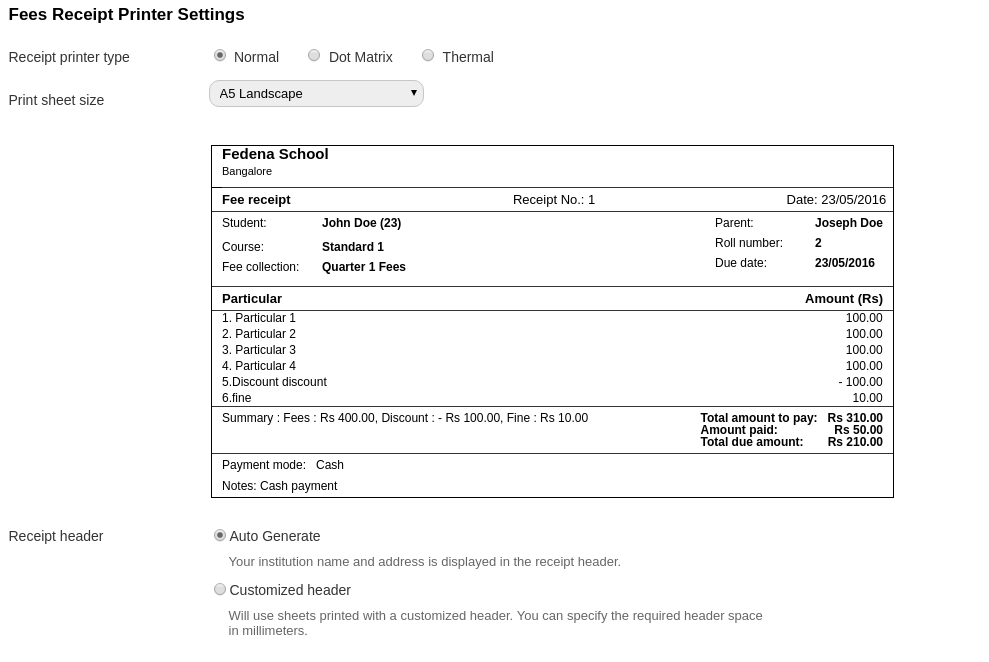
You can set your printing preference under the Fees section in Finance module. Admin or privileged employee can perform this task. Under the Fee section, there is a Fee receipt settings where the printer settings can be configured.


Fedena Fee Printing Module


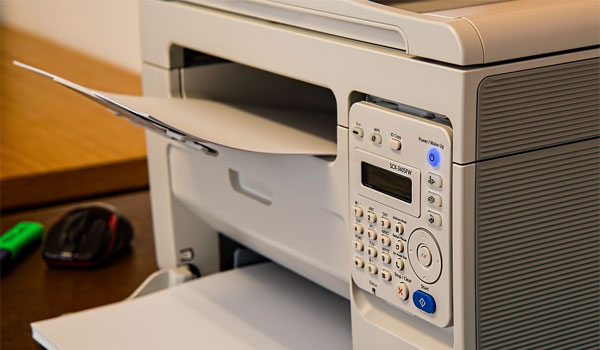
The user can select the printer type and the print sheet size. In Fedena 3.5, Fedena now supports multiple printer types. The first option ‘Normal’ covers Laserjet, Inkjet, Deskjet etc. These are the most common type of printers used in institutes now a days.


Inkjet


Many institutes still use dot matrix printer and from the constant feedback from these institutes we have included the dot matrix printer support. The dot matrix printers are slowly getting replaced by thermal and laser jet printers across the globe but until they do get replaced, support for such technology is still paramount.


Once the printer type is selected, the page size can be chosen. Fedena 3.5 supports A4 and A5 page size. A4 is available in portrait mode only.  A5 can be printed in portrait and landscape mode. Once you select the printer type and page size, Fedena will give you a preview of the print page. This we think is one of the features that will help our users  decide on which printing pattern to select.


Another additional option the user can select is whether to include the default header or to go with a customized header format. Default header is usually selected when the receipt is printed on plain paper. Fedena will generate the header with the given school name and other details. If the header is printed on the letterhead of the institute, then the customized header option can be selected. The option to preview the print page once the header options are selected are available to finally allow the user to print the receipt.

FeeReceipt_BlogScreenshot


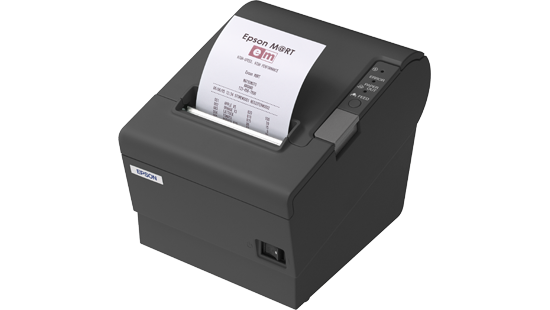
Including receipt printing using Thermal printers is one of the main highlights of the 3.5 release. Thermal printers are replacing the dot matrix and laserjets in institutes. Not only in institutes, most point of sales (pos) use thermal printers. Main advantage of Thermal printers is the reduction in paper consumption. The amount of paper required is very less compared to dot matrix or laserjet/inkjet printers.


thermalprinter


We @Fedena are hopeful that users will like this new feature of selecting multiple printer types and printing options and would squeeze the maximum benefit out of it.


information and communication technology in schools

Importance of Information and Communication Technology in Schools

How to embrace ICT to get the best out of it

The internet has become an integral part of every individual’s life. Our nation has become known for it, Fedena’s current home is in a city that has been bolstered by the internet industry in the last few decades, and social relationships have revolutionized in its wake. So, it is no surprise that the use of the internet, even in school, has increased at a rapid rate. ICT, or Information and Communication Technology, has given wings to scholars, educators, and allied staff in a multitude of ways. Software in schools has empowered them to uplift their communities through the use of technology related activities in the world of education. But there still remains a negative image of management software in the minds of many people.

Educational institutions are key to eliminating these misconceptions through the reasonable implementation of educational management software in schools. They do this by implementing ICT to create positive outcomes for their most visible of stakeholders – their students.

Nowadays, when schools are increasingly transforming themselves into smart schools, the importance of educational technology also increases.

This rising ubiquity of ICT has meant that we must monitor its role in education. It is necessary for decision makers like education ministers, school administrators, and educational institutions to be sufficiently insightful about methodologies that enable the implementation of information and communication technology in schools. Latest technologies can sprout novel education activities in addition to enhancing existing education systems. At Fedena, this is what drives us. We have spoken extensively about the role of information technology in education.

Let’s take  a look on the challenge of information and Communication Technology in schools

The rapid rate of technology growth in schools means a shake-up of the educational framework it occupies space in. To take full advantage of school management software, like Fedena, it is important to understand how they work. It is not enough to merely show on paper that educational technology is an option offered to students – efforts must be made to integrate its use into the current way of doing things at your educational institution.

There is a huge impact of the internet on students’ lives. Learning exercises have to be reoriented and reformulated, shifting the focus from obsolete and constraining manual sources to dynamic open source ones. For this to be realized, the broad utilization of web access has to be a strategy that is thought through and implemented by the powers that be at school. Implementing a technology as simple as Fedena can make a world of difference. When you decide to take this step, Fedena integrates well into existing systems at your school while also playing well with others.

Information and Communication Technology in School – Boon or Bane?

There will always be detractors to the use of technology at school. After all, we have had a successful run without it so far. So is it not gimmicky or indulgent to claim that we must integrate the use of such technology in our schools? Do our students really need anything more than a pen, paper, and a determined teacher?

We have previously illuminated the uses of information and communication technology on the Fedena blog. And our argument stands. The use of technology is an opening of worlds through the increase of access students have to a world database of knowledge. Not taking advantage of educational technology is foolhardy. The goal of any educational institutions is to graduate
well-rounded individuals who can take on the challenges of the world they enter and remain future ready. To enable this, we must stop thinking of school software as a monster to be battled, but embrace this boon through dynamic cooperation, eager implementation activity and with an overarching positive attitude. This must emerge from the stakeholders that can make change possible – government and academic institutions.

Fedena, for instance, is a school management software that benefits all. Administrators notice that automating processes makes their lives easier while parents and students rest easy knowing that their teachers are enabled by 24/7 availability through private, personalized communication channels. These are only a few of the many advantages Fedena offers to the education ecosystem.

How To Manage the Use of Information and Communication Technology in Schools

The repetitive cry we at Fedena hear from teachers and parents alike is what a distraction some technologies can be to their students. This is an undeniable fact. The mere presence of interactive media recreations and engaging web amusements has been a time sink for otherwise hard-working students. Schools cannot afford to tiptoe around the issue – they must be boldly and firmly handle these issues, by realizing that the solution lies in choosing the right technology and not attempting to change human behavior. Frankly, schools do not have enough time and resources to stop students from engaging with technology. Nor do their guardians. A better solution would be to direct this interest into more constructive systems. Engaging a child through the use of dynamic content in the course readings shared on

School software helps in involving them in lively group discussions created according to subject matter interest, and providing one on one attention through personalized communication is likely to give us better results than outright banning of the inevitable.

Teachers Turn Information and Communication Technology from a Zero to a Hero

School establishments cannot deny their imperative part in overcome technological distractions. Their key is to engage students by encouraging the practice of edutainment through the use of information and communication technology in schools. Schools can give their students a chance to be acquainted with educational diversions monitored by their educators.

Simultaneously, instructors have to be the primary spark and directors of
information and communication technology execution at schools. They should be the operators of progress from the traditional technique towards present modern day techniques resulting in a worldwide change in learning. Teachers making advancements in this realm today might think this is just a supplementary aspect to the more formal parts of teaching, but they are the
architects who will establish how educational management system, will be utilized in new ways in the future.
How Experiential Learning Contributes To Better Learning Experiences

The very concept of experiential learning has been thrown around quite frequently of late. It’s a growing trend in the teaching process that more and more schools have begun adopting. The idea is quite simple and works around the process of learning through one’s experiences or a “reflection of doing”.
 
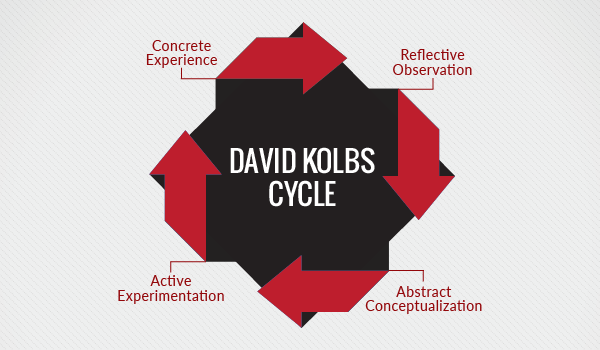
Originally coined by David Kolb the process follows a cycle of 4 steps:

1. Concrete Experience
2. Reflective Observation
3. Abstract Conceptualization
4. Testing/Active Experimentation
 
Kolb_model
 
This model of steps is something that seems to appear time and time again in our lives and it has been argued that this learning cycle can begin and end at any of these steps.
 
How It Works
 
So what this means, is that the process begins with a person carrying out a particular action and then seeing the effect of the action in a situation. Following this, the second step involves understanding these effects in the instance of the situation in the event if the same action was taken in the same circumstances, it would be possible to anticipate what would follow from the action. In this pattern the third step would follow, understanding the general principle under which the particular instance falls. When this general principle is understood, the last step is application through action in a new circumstance. This ends up completing the cycle.
 
The World is Your Classroom
 
Worldisaclassroom
 
It can be argued in favor of experiential learning that concepts that may be hard to grasp in the classroom can be easier to come to terms with through real world experiences. Studies have proven that learning in a real world experience can prove to be more effective in that the learners is made to adapt based on the real world surroundings through careful observations and generalization. Through this learning experience, one can:
 
1. Gain valuable experience in the field.
2. Study and learn on a more global and local scale.
3. Understand the importance of real life experiences.
4. Participate actively in a dynamic environment.
 
Individual Learning: A Matter of Here-and-Now
 
Many studies believe that the very concept of experiential learning is focused on the “here-and-now” that can have serious implications on what we take out of the overall experience. By this, we regard experiential learning as being more on the lines of individual development or developing people as individuals. This is a fair assessment as most experiences, in general, are determined and controlled.
 
Conventional VS Experiential
 
Today, schools and organizations dedicated to educating focus on a variety of methods that they believe will contribute to one’s overall development. But there is a clear distinction in how these procedures are carried out. Some consider the concept of learning through experiences and one’s individual development as opposed to conventional methods which are designed for the purpose of developing one’s capabilities to meet a measurable standard or an organizations’ standards.
 
It’s no secret that people need such abilities, skills and knowledge but what needs to be highlighted here is that conventional methods are more focused on the bureaucratic requirements of an organization and one’s overall ability to meet such qualifications and standards. Therefore, the notion of developing people as individuals is regarded by many employers and much of the educational establishments as less efficient and effective than conventional training and teaching.
 
Many fail to see the benefits experiential education holds. By developing people as individuals – rather than simply transferring arbitrary capabilities helps develop essential things such as confidence, self-esteem, personal strengths, and crucially a rounded sense of purpose and fulfillment which fundamentally improve attitude, life-balance, and emotional well-being. These are just as important for productive work and a healthy society as the essential skills and knowledge typically represented in conventional education and work-related training.
That being said, there are a variety of differences between conventional and experiential learning:

Conventional Learning Experiential Learning
Training focused – Very Theoretical Learning focused – Very Hands-on
Fixed in its framework Open ended and flexible
For organizational needs For one’s personal growth
Involves the transfer of knowledge Knowledge is usually developed
Examples: Lectures, presentations etc Examples: Hobbies, Passions etc.

 
A Better Learning Experience
 
It’s no surprise that the vast majority of teaching and training in education and work continues to be conventional and not experiential. This can sometimes be understandable because, in terms of both education and later work, an organization’s needs may be put ahead one’s individual needs. It can be argued here that society is a bit ignorant and ‘broken’ with regards to this.
It’s difficult to deny the benefits experiential learning brings to the table. It can effectively address the real personal development needs of people, whether young or old and see improvements in confidence, self-esteem, personal responsibility and maturity which are so elusive when approached through conventional prescriptive teaching and training methods alone.

Future Of Technology In The Classroom (What to expect)

future-edtech
 
Flying cars, time machine these are some promising technologies which we expect to see within the next few years. We get excited thinking about these far-fetched technologies that inspire our future generations to learn science, math and engineering. What does the future of technology in the classroom hold in reality? What type of technologies will inspire our future inventors and engineers, scientists and shape their minds? These are some questions which keep boggling our minds when we think of the future of our children and their education. Either you are a school teacher or a parent; we always want to give them the best education. Here we bring you the future technologies that will hold the future of classroom and shape the mind of children.
 
Augmented Reality Eye-Wear
 
This amazing technology seems far closer to reality since Google’s confirmed the launch of the Augmented Reality Eye-Wear glasses. These glasses are actually a data layer on top of our eyes. It doesn’t matter if students are wearing any style of glasses because all data is sent directly to their Augmented Reality contact lenses. No doubt, we have digital media textbooks, but it will be more exciting to imagine having Hitler sitting on a desk and explaining the World War. This enriching experience enjoyed by students inside and outside the classroom would be wonderful.
 
Biometrics
 
This technology will bring about a revolution in the world of science. The future of technology like biometrics will help in understanding the emotional & physical state of children and their learning in the classroom. Based on signals of biometrics, course material can be tailored individually. To understand the performance of students, their physical traits like heart rate, facial expression, odor and skin moisture, could be measured, studied and taken action on. Teachers can easily understand whether any children need additional assistance with the behavioral signs such as gait typing, rhythm, and voice of children. This technology will also help to understand what teaching techniques will work best for students.
 
Multi-Touch Surfaces
 
The concept of multi-touch has been a hot topic in the world of technology since the huge success of iPhone. Even many companies like Microsoft have been experimenting on multi- touch surfaces, consumers have become addicted to it. With the advancement of technology, this multi-touch surface has become more advanced and cheaper; we expect some more products with multi-touch surfaces that will be helpful in the learning of student and change the future of technology in the classroom. Just think of a classroom where every student is working together with their peers across the globe and employing computer-generated objects right in front of them. With this technology, virtual tools, streamed video and millions of online resources are available to teachers and student with a single swipe of the desk.

As we are proceeding to more advanced technology in 2016, the future of classroom sounds amazing. Every time you visit our blog, you will definitely find something new to read. So stay tuned for more!
 

Do Or Don’t: Listening To Music While Studying?

It’s easy to underestimate the effect music can have on you. Music is a powerful art form that can bring up emotions, inspire motivation and sometimes even alter your mood. Today, it is quite common seeing students frequently listen to music while studying to make the process “less painful” and, in some cases, because they believe music will help them learn. So it brings about the big questions, is it true that listening to music helps while studying? Should you do it or not?
Many may be in favor of listening to music while studying, but the subject itself is debatable because no side on the matter is 100% correct, making it quite subjective and purely based on a matter of opinion.
 
What Studies Tell Us
 
· Some studies that have been conducted about the effects of musical distraction on cognitive task performance, have found the idea of music improves cognitive performance.
 
· Studies have indicated that music can have sedative and stimulating effects on the mind that can reduce both depression and anxiety.
 
· Studies have also determined that genres of music may be linked to one’s personality whether extroverts or introverts and can have varying effects.
 
· Noise levels, as well as sounds with lyrics, can have ambiguous effects on one’s cognitive process.
 
Staying Focused: The Mozart Effect
 
Studies have shown that listening to music before studying or performing a task can be beneficial as it improves attention and also one’s ability to do mental math. Many researchers, as well as students, have branded this practice of listening to music while studying to be termed as the “Mozart Effect”, as they believe it to help in developing muscle memory. Though this effect only truly applies to those listening to Mozart’s music or anything instrumental for that matter, many today listen to a wide genre or music.
Many believe that listening to music can be uplifting as it puts them in a more positive mood to study. This lift in the mood will only increase one’s IQ. Choosing music that one is relatively familiar and comfortable with will in time increase overall productivity.
 
The Other Side
 
While many may be ‘for’ listening to music while studying, others have differing views. Studies have also shown that listening to music while studying can also be very distracting. This may not be prevalent in the case of instrumental music such as the works of Mozart but mainly in genres with extended vocals or major distortion of sound such as metal music (Students don’t usually study when listening to metal music).
 
Studies have shown that the mind tends to have what is known as cognitive limitations. These limitations are exposed when someone tries to do two things at once or multitask. This is especially the case when listening to music while studying. It tends to break focus. This is especially the case when listening to music that isn’t particularly beautiful to our ears. The overall effect then can be dampening.
 
Two Sides of the Same Coin
 
Music can tend to have a profound effect on one’s state of being. This can alter simple things such as moods and one’s heart rate. It can sometimes energize and otherwise depress. But there’s no doubt that music can play an effective role in getting students to another level while studying.
Some may advise staying away from music with lyrics especially when working on something that’s heavily based on language. Some may find comfort in this too. In the end, studying will remain quite a painful chore for many and it will really come down to how you wish to tackle such a hard situation, music or sans music.
 
Choosing What’s Right
Listening to Music while studying
 
So should you listen to music while studying? Is it advisable? One can never really determine an accurate response to this question. The effects of listening to music while studying are mixed and depend on the type of music you listen to as well as the degree to which it distracts you. By this, it means carefully tailoring the music to listen to while studying, based on the situation and your mood, can help keep you focused. Choosing the wrong kind of music can be counterproductive for your studies.
So choosing the right music can be integral here:
 
1. Classical is Safe – The genre is peaceful and harmonious. It’s a safe bet choosing classical as music to listen to while studying.
 
2. Instrumental – Going with Instrumental placed together with modern sounds can be beneficial. It can prove more relaxing than anything else.
 
3. Chill the Mix – Going in for music that’s more down tempo and blends modern electronic genres such as ambience and trance can be the perfect study companion.
 
4. New Age Music – If the latest hits are truly your pick, then you could try them, so long as they give you the satisfaction you desire when you listen to music while studying.
 
Results are Always Subjective
 
In the end, most studies will only be based on sample sizes that have been studied. It is important to understand that no two minds are ever truly the same. Music is like art and can, therefore, be perceived in a variety of ways. What one may find comfort in, others are downright ignorant of it.
It is why such genres exist, to appeal to a variety of people. The question of whether one should listen to music while studying will always be a matter of debate with many favoring the practice and others ignoring.

Smart School: Is it worth the hype?

Smartphones, Smart TVs, Smart watches, and Smart Schools – the demand for smart products is at an all-time high. People living in this “smart” era can easily prove how smart devices have made their lives better in multitudinous ways. But, is there anyone who can vouch for smart school system’s effectiveness? Does a smart school make a significant difference in children’s development? Or is it just another gimmick to score better than traditional schools? We have covered all your questions here to help you decide why installing smart classes in schools is imperative!
 
Let’s Start with Basics – What is a Smart School?
 
Smart school is a technology-based teaching learning institution that prepares children for the information age. In smart schools, teachers take help of a wide array of multimedia tools including movies, photos, audio, slides, etc., to make the teaching learning process more effective and efficient. Unlike traditional schools, the curriculum and guidelines are not rigid and teachers can employ a variety of multimedia tools for enhanced learning.
 
The definition of smart schools appears to be straightforward. However, the approach about the impact of adopting smart classes in schools needs to be pondered upon. A majority of smart schools today use advanced technologies to transfer traditional school program. In other words, these schools stick to the traditional curriculum and only use new technologies for disseminating information. On the contrary, there are a few educational institutions that adopt smart school systems staunchly to change the education and tools thereby outpacing traditional educational system.
 
Smart School Goals – It makes all the Difference!
 
Today’s goals determine tomorrow’s actions. And this is why smart school goals are farsighted and best-suited for the Information and communication technology (ICT) era. Smart school systems focus on a holistic (physical, mental, emotional and psychological) development of students. It is a proven fact that no two individuals are same. Then, how can we achieve miraculous results by treating every student alike? Smart schools are designed to identify and hone individual’s abilities thereby helping them excel in an area of their choice. One of the key goals of smart school systems is to stimulate public participation amongst students. By doing so, students are made to overcome their fears while learning to express their views that further prepare them to face the outside world.
 
Building Blocks of Smart Schools
 
Student Management System
The first step towards being a smart school involves having a student management system in place. This system automates many processes of your institution and allows you concentrate on teaching and imparting knowledge.

Curriculum
The curriculum for smart classes in schools is designed for all-round development of students. It is framed in a unique way to integrate knowledge and skills to ensure balanced and comprehensive development.

Pedagogy
It gives freedom from typecast lesson plans of a traditional educational system and allows for blending in learning strategies for more effective and efficient knowledge transfer.

Assessment
Assessment in an educational system is as important as the teaching-learning process. The assessment in smart classes is continuous, comprehensive and integral. Accurate feedback is another important component of assessment in ICT educational system.

Teaching Methods
The teaching methods in smart schools are student-centric. The teachers can use a variety of multimedia tools and materials for development of students’ abilities and talent. Teachers can even record their lessons and put them on a central network so that students can refer to it whenever required.
 
Having talked about smart schools in detail, it can be easily concluded that smart school system is brilliant and should be adopted in schools for more effective teaching-learning. It’s true that establishing smart schools in India is challenging but every step taken in this direction will make our educational system and nation strong and superior!
 
Take the first step towards making students’ lives better by introducing smart classes in schools.

8 reasons to be excited about Fedena ERP in 2016 – Rails 5.0, Analytics and more

It is the start of a new academic year and our engineering team is working on some highly useful features for Fedena that will enhance your productivity and save a lot of time for teachers. Some of these are in the design stage and some have already started development. Have a quick preview of what you can expect in the coming days from Fedena engineering team.
 
1. Analytics
 
Fedena Analytics
 
Are you finding it hard to take decisions at your institution due to lack of data? The analytics module is aimed at giving you graphical and analytical reports from the information in Fedena. Be it the administrator of the institution or the teacher of a course, every high-level report from the dashboard can be drilled down to give a granular look into your data.
 
2. Rails 5.0
 
Rails 5.0
 
We plan to move to the newer Ruby on Rails, version 5, to enhance functionality and performance of your favourite School Management System. Rails 5 will improve performance and enable the use of latest technologies, thus enhancing yourFedena experience. This also allows us to ship new features and updates faster to you. This will be a blessing to our technology partners who can develop new features quicker than ever before.
 
3. Enhanced Accounting Module
 
Fedena Accounting
 
An accounting module in Fedena that you can use to keep track of your income and expenses in your institution. All transactions in Fedena like fees and payslips will automatically get recorded in the respective accounts. Create and manage your cash, bank accounts and etc in Fedena and easily create your balance sheet or income statement with the click of a button.
 
4. Automatic Timetable Generation
 
Fedena Automatic Timetable Generator
 
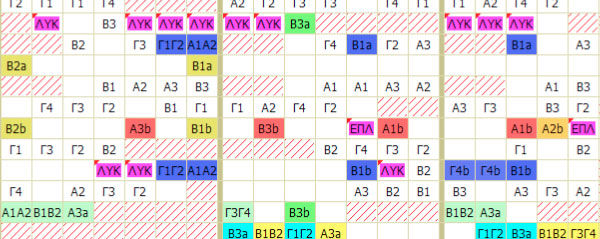
Speed up your timetable generation process with the Automatic Timetable Generator in Fedena. Whether you want to generate it for a batch or for your whole institution, enter subject or batch constraints, assign teachers, click on allocate and sit back while Fedena generates the best timetable for you. Don’t want ‘Mathematics’ on Mondays? Take control of your timetable manually at any time, without recreating it again.
 
5. Enhanced Applicant Registration(Admission) Module
 
Fedena Applicant Registration
 
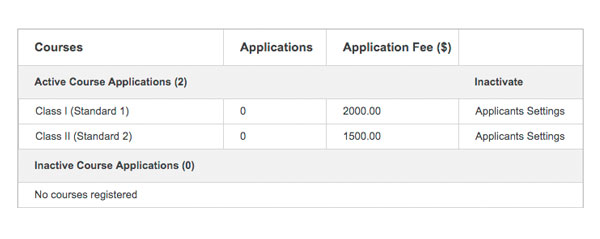
The Applicant Registration module you need in your institution to manage new admission requests. Now comes with features like customizable fields, status messages to record each stage of the admission process and the option to archive your applicants after the close of the admission process. We have super-charged the applicant registration module to super-charge your admissions process.
 
6. Advanced HR Reports
 
Fedena HR Reports
 
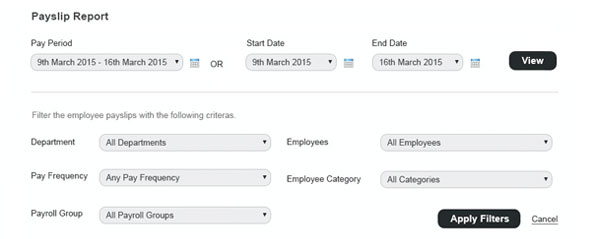
This feature brings advanced reporting abilities to the HR module like Payslip Reports, Employee Payroll category wise reports and payslip comparison reports. With predefined reports, you can start using them right away. These report formats can be customized to add or remove fields as per your needs and what’s more? Save them as templates and forget about making reports again.
 
7. Enhanced Tally Integration
 
Fedena Tally Integration
 
This enhancement brings a host of features to the Tally module. Now you can get fee collection wise amounts as well as particular wise amounts in Tally since all collections and particulars will have a ledger entry. Gross salary paid and payslip deductions made in Fedena will all get reflected in Tally. All Fedena related accounts and ledgers are created by default and all entries will be created only if they previously do not exist in Tally thus ensuring no duplicity.
 
8. Transfer Certificate Generator
 
Fedena TC Generator


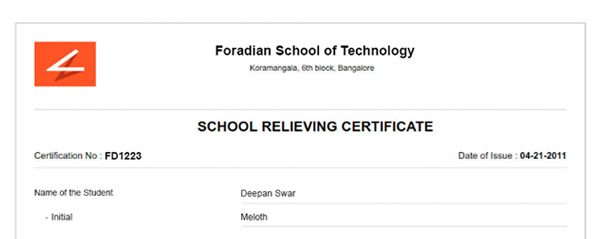
You asked for more options in generating the Transfer Certificate and we have heard you. With the all new TC generator, each of the three sections – header, student details, and footer have customizable fields, that you can choose to show or hide from the TC. Customize the header template or use your own preprinted header. Map to existing student details in Fedena or use custom fields to enter data. Define clauses and add up to 4 signature fields in the footer area. Create your own customized template for the Transfer Certificate of your institution.


What’s next?

Powering your institution with the all new Fedena is but one step towards providing the highest quality of education, let Fedena take care of your institution while you concentrate on what you do best and we understand that providing high quality education is a journey of a thousand miles which begins with one step, take that one step today.
 
Fedena Customer Success


Happy Earth Day

10 Quotes to Celebrate Earth Day!

Happy Earth Day

In 1970, Senator Gaylord Nelson founded Earth Day. Now celebrated worldwide, it’s a day we all pause to think about our environment and the planet. But why just stick to one day, here are 10 quotes to inspire the environmentalist in you throughout the year!


“Look deep into nature, and then you will understand everything better.”
                                                                                                               – Albert Einstein


“Man is still the greatest miracle and the greatest problem on this earth.”

                                                                                                             – David Sarnoff


“I’m saying with very few exceptions nothing lasts forever, and among those exceptions, no work or thought of man is numbered.”

                                                                                                             – Iain M Banks


“When the well’s dry, we know the worth of water.”

                                                                                                           – Benjamin Franklin


“If more of us valued food and cheer and song above hoarded gold, it would be a merrier world.”

                                                                                                           – J.R.R. Tolkien


“Where flowers bloom, so does hope.”

                                                                                                          – Lady Bird Johnson


“Earth provides enough to satisfy every man’s need, but not every man’s greed.”

                                                                                                           – Mahatma Gandhi


“Aim at heaven and you will get earth thrown in. Aim at earth and you get neither.”

                                                                                                            – C.S. Lewis


“They say a little knowledge is a dangerous thing, but it’s not one half so bad as a lot of ignorance”

                                                                                                           – Terry Pratchett


“The wide world is all about you: you can fence yourselves in, but you cannot forever fence it out.”

                                                                                                           – J.R.R. Tolkien


Exploring the Unique Advantages of Online Classrooms

Exploring-the-Unique-Advantages-of-Online-Classrooms (1)
 
In a layman’s term, a classroom must entail some building with desks and a chalkboard where students and their teacher meet to engage on matters of academic interest. Thinking of a classroom in such terms is right but not complete. Over the years, technology has shifted the nature of learning through innovative approaches that include the online classroom. The good part about online classrooms is that they have nearly every advantage that one would expect from a normal classroom plus the extra advantage of convenience. In fact, online classrooms are more engaging, versatile and exciting than the conventional classroom because they bring together learners from multiple backgrounds and experiences.
 
Interesting Learning Techniques
 
Usually, online classroom teachers have various options of capturing and retaining the interest of their students. Comparative surveys between online classrooms and the walled classes have established that the online option gives the students more quality think-time because of the unique qualities of the teaching techniques. Naturally, technologically savvy learners are more inclined towards online classroom discussions than face-to-face discussions. Use of videos with impressive graphics helps to spur the interest of the learners in the subject. Besides, the videos aid enhance the understanding of the lesson. The level of concentration is higher than in a conventional setting and the discussions are less likely to veer off the course of the subject like they usually do in a traditional classroom. Overall, this advantage eventually translates into faster learning and long term interest in the subject matter.
 
The Advantage of Reduced Costs
 
You do not expect to incur the same cost of learning in an online classroom like you would spend in a conventional learning environment. Online classrooms require lesser logistics and most learning materials are availed for free on the internet. Many people prefer the online option because they spend less money and benefit from a variety of courses. Enrollment, registration and commencement of the courses is easier, faster, cheaper and highly convenient for people who distaste the logistical challenges that are associated with the traditional classrooms. In general, the online classroom offers high quality and convenient learning at very affordable costs. This option encourages people to pursue their career courses without ruining their financial stability.
 
The Flexibility of Learning from Anywhere
 
Nothing pleases the modern learner more than the advantage of learning from the comfort of their homes or offices. With online classrooms, you can even learn while holidaying on the beachfront resorts of the Bahamas. Naturally, learning is a continuous process that should never be hindered by the routine of the learner. Online classrooms allow you to explore the delights of technology as you broaden your knowledge on your preferred courses. Corporate executives who wish to study a special course, but have no time to attend a classroom have the option of the online classrooms to help them realize their dreams. Recent technological innovations allow for increased interaction of students and instructors, which helps to enhance the social intelligence of the learners. In every sense, this model of learning is the best solution for the fast-paced modern societies.